
March 5, 2026

One of the most overlooked parts of retirement planning is what happens to wealth after someone is gone. Estate planning isn’t just about leaving money behind; it’s about ensuring what has been built ends up in the right hands, in the right way, with as little stress and tax as possible for those left behind.

A well-designed plan brings order to the parts of life that can be controlled—beneficiary designations, asset titling, and tax strategy—so decisions aren’t made in reaction to the unexpected. It provides direction for loved ones, reduces uncertainty, and helps wealth continue serving its intended purpose long after work stops.
At Schmidt FM, estate planning is part of every retirement conversation because planning that ends at retirement is incomplete. Legacy deserves the same clarity and strategy as every other part of a comprehensive financial life.

Quick Estate Planning Checklist
Estate planning helps keep wealth aligned with the values it was built on, even after the person who shaped it is no longer here to guide it.
Getting started doesn’t have to be complicated. Here’s the framework we use to help clients organize their thoughts and begin meaningful conversations with their legal and tax teams.
|
Step |
What to Do |
Why It Matters |
|
1. Clarify your goals and intentions |
Define what “a successful legacy” looks like, whether that means caring for family, supporting meaningful causes, or preserving assets for future generations. |
Clear goals guide every other decision and help ensure wealth continues to reflect personal priorities and values. |
|
2. Take stock of your assets |
List everything you own: real estate, investments, retirement accounts, insurance policies, and personal property. |
Knowing what you have (and how it’s titled) is the foundation for effective estate planning. |
|
3. Choose who (and what) matters most |
Identify the individuals and causes meant to benefit from the estate. Align assets with personal values and key relationships. |
This ensures the plan supports both the people and principles that matter most. |
|
4. Build an estate plan toolkit |
Collaborate with trusted professionals to create or update the following: Will; Financial and medical powers of attorney; Living will or advance directive; Trusts, if appropriate |
Having these documents in place brings structure and legal clarity to long-term intentions. |
|
5. Review beneficiaries |
Confirm that all retirement accounts, insurance policies, and other assets list the correct beneficiaries. Schmidt clients receive structured support with this review as part of the Client Life Cycle, ensuring each designation fits within the broader financial and estate plan. |
Outdated designations can override even the most carefully written will, so consistent review helps keep everything aligned with long-term goals. |
|
6. Communicate clearly |
Ensure family members and key decision-makers understand intentions and know where to locate important documents. |
Open communication reduces confusion and relieves stress during transitions. |
|
7. Keep it current |
Revisit the estate plan after major life events or significant financial changes. |
A plan that evolves alongside life circumstances remains the one that works when it matters most. |
At Schmidt FM, we help clients coordinate efficiently and effectively with their legal and tax professionals to keep the plan clear and the pieces aligned. Estate planning isn’t a one-time event; it’s built into our annual client review cycle because we know how quickly life can change. When your financial life evolves, your plan should evolve with it.

How Schmidt FM Helps Clients Stay Aligned
At Schmidt FM, estate planning is part of a continuous process known as the Client Life Cycle. Each quarter focuses on a different area of a client’s financial life, keeping every piece of the overall plan connected and current.
This rhythm makes it possible to stay proactive rather than reactive; reviewing, refining, and anticipating changes before they become problems. It’s how each wealth strategy continues to evolve in step with life itself.
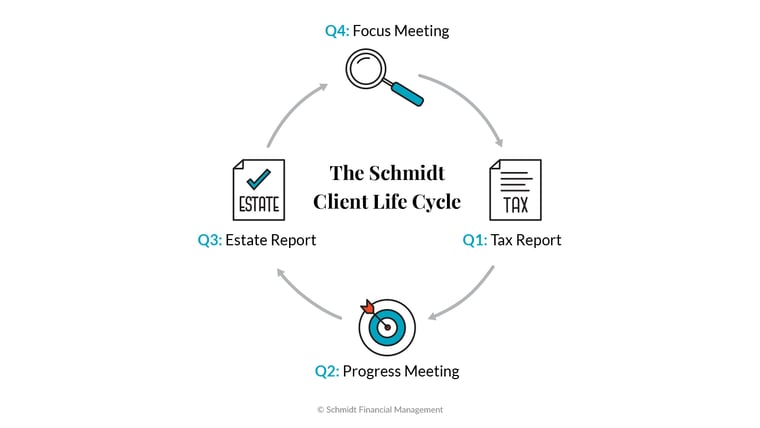
The Schmidt Client Life Cycle
|
Quarter |
Focus |
What We Cover |
|
Q1 |
Tax Report |
The year begins with a focus on tax efficiency, analyzing realized gains, deductions, and opportunities to reduce overall tax burden. Insights from this review guide next steps and set the tone for the year ahead. |
|
Q2 |
Progress Meeting |
This meeting assesses how the financial plan is tracking toward established goals. Investment performance, cash flow, and any life changes are reviewed to determine whether adjustments are needed, keeping the overall strategy grounded in both progress and perspective. |
|
Q3 |
Estate Planning Report |
Midyear is dedicated to revisiting the estate plan. Beneficiaries, titling, and key legal documents are reviewed to confirm they still reflect current intentions. Coordination with legal and tax professionals ensures every detail remains aligned across disciplines. |
|
Q4 |
Focus Meeting |
The final quarter is about finishing strong. It’s the last opportunity of the year to make charitable gifts, maximize 401(k) or 529 contributions, or capture company matching benefits before deadlines close. We also review the full financial picture on investments, insurance, liquidity, and long-term goals so every decision heading into the new year is intentional and tax-smart. |
The Client Life Cycle provides structure for ongoing reviews, but certain events shouldn’t wait until the next scheduled meeting. Reaching out early helps protect the plan and ensures critical decisions are made with the right support.
Situations that call for immediate attention include:
- A terminal illness or major health diagnosis
- Signs of fraud, identity theft, or suspicious account activity
- Marriage, divorce, or the birth or loss of a family member
- Sale of a business, inheritance, or other large financial change
- Legal or tax developments that could affect estate or trust documents
Addressing these moments promptly helps preserve clarity, reduce risk, and keep the entire financial strategy working in sync.
Ready to Bring Your Estate Plan Up to Date?

Estate planning isn’t a one-time project; it’s an ongoing part of protecting what you’ve built. If it’s been more than a year since you reviewed your plan—or if life has changed in any way—your next client meeting is the perfect time to revisit it. Our team helps clients to coordinate with your legal and tax professionals, identify what documents need updating, and make sure your plan reflects both your current goals and your long-term vision.
When you become a Schmidt client, this meaningful part of financial planning becomes part of your life cycle too. Today is a great day to begin aligning your financial life with your goals and purpose, you can do this by scheduling an intro with Schmidt.
Estate Planning FAQs for Tech Executives
Here are some of the most common questions we hear from tech executives as they plan for retirement and beyond. Each reflects the unique challenges of managing complex equity, concentrated stock positions, and high income while building a lasting legacy.
1. I’m not retired yet. When should I start thinking about estate planning?
Estate planning isn’t something to wait on until a career slows down. For tech professionals with significant equity, stock options, or concentrated positions, early planning ensures those assets can be transferred, liquidated, or protected efficiently if the unexpected occurs.
2. How does my equity compensation fit into an estate plan?
Equity is often the largest and most complex part of a tech executive’s balance sheet. Schmidt FM helps coordinate with legal and tax professionals to ensure vested and unvested shares, stock options, and RSUs are titled, taxed, and transferred correctly. Proper planning may help reduce tax exposure, streamline liquidity for heirs, and prevent equity from getting trapped in probate.
3. Can a trust help manage or transfer my tech stock more efficiently?
In many cases, yes. Trusts can provide structure, privacy, and tax advantages when managing or gifting concentrated equity. Whether it’s a revocable living trust for simplicity or an irrevocable trust for tax strategy, the right structure helps ensure wealth transitions smoothly and intentionally.
4. How can I minimize estate taxes on my stock or liquidity event?
Strategic timing, gifting, and Roth conversions can all play a role. During tax and estate planning reviews, opportunities are evaluated to shift appreciated assets, reduce future taxable growth, and remove taxes paid on conversions from the estate—keeping more wealth compounding for future generations instead of the IRS.
5. What happens to my RSUs or stock options if something happens to me?
Each company plan operates differently. Some unvested shares may expire, while others may transfer to a designated beneficiary. As part of the estate review process, Schmidt FM comes alongside clients and helps analyze plan rules together and ensures that beneficiary designations, estate documents, and tax strategies remain aligned.
6. How does Schmidt FM coordinate with my attorney and CPA?
We help clients connect the dots between their legal and tax professionals. With our support, clients often feel more confident and prepared when they coordinate and communicate decisions to their attorney or CPA.
7. What should I review after a major life or career event?
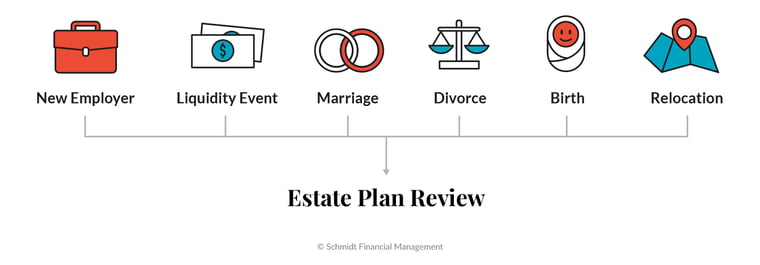
Any significant change, such as a new employer, liquidity event, marriage, divorce, birth, or relocation should trigger an estate plan review. Beneficiaries, titling, tax exposure, and trust structures may need to be adjusted to reflect new circumstances. During the next client review, the Schmidt FM team helps identify which updates are most relevant.
8. Is estate planning just about what happens after I’m gone?
Not entirely. A strong estate plan also protects during life, with powers of attorney, health care directives, and mechanisms that allow trusted individuals to manage assets if the account holder becomes unable to. Estate planning is about continuity and stewardship, not just inheritance.
At Schmidt FM, estate planning is integrated into the broader wealth strategy, reviewed and updated regularly through the annual Client Life Cycle. Schmidt works to keep this cycle moving forward so client plans stay coordinated, receive regular review, and offer a clearer view of the benefits behind every decision.
9. How do year-end tax and retirement deadlines tie into estate planning strategy?
As the year winds down, this is where tax strategy and estate planning start to overlap. The fourth quarter is when clients take a closer look at opportunities that can make a meaningful impact before the calendar resets. Things like charitable giving, 401(k) contributions, and 529 plan funding all have year-end deadlines and each one plays a role in shaping the bigger financial picture.
|
Financial Action |
Deadline |
Key Point |
|
Charitable Donations |
December 31 |
Essential for taking a tax deduction for the current year. |
|
529 Plan Contribution |
Varies by state; most are December 31 |
Key for claiming a state income tax deduction or credit. |
|
401(k) Contribution |
December 31 |
Final deadline for employee salary deferrals. |
|
Traditional/Roth IRA Contribution |
April 15 of the following year |
Gives more time to contribute for the prior tax year. |
|
Roth IRA Conversion |
December 31 |
Must be completed by year-end to count for the current tax year. |
*Dates listed may not be consistent year over year. Connect with your financial advisor and CPA for exact dates.
This is usually the last opportunity to make larger charitable gifts, maximize retirement contributions, or capture company matches before year-end. For us, that’s what the Q4 Focus Meeting is all about; helping clients wrap up the year intentionally and make sure every decision supports both current tax goals and the long-term legacy plan.